Hidden Water Damage Signs in Meridian-Kessler Homes: Catch It Early
Hidden water damage is the quiet kind. It does not flood your kitchen or soak your carpet overnight. It works behind drywall, under flooring, above ceilings, and inside crawl spaces for weeks or months before you ever see it. By the time most Meridian-Kessler homeowners notice, the repair bill has doubled and mold has already taken hold. That is the frustrating part, because almost every case we respond to had warning signs the owner could have caught earlier.
At Meridian-Kessler Water Restoration, we have been answering emergency calls across Central Indiana since 2018, and a large share of those calls are from people who finally spotted a stain, a smell, or a soft spot and realized something had been wrong for a long time. We are IICRC certified, BBB A+ rated, and we work directly with your insurance carrier when a claim makes sense. If we inspect your home and find nothing serious, we will tell you directly. No upsell, no scare tactics.
This guide walks through the most common hidden water damage problems in Meridian-Kessler homes and exactly what to do about each one. Read it the way you would scan a checklist, because catching one of these early can save you five figures.
Problem: Stains and Discoloration That Keep Coming Back
You painted over that yellow ring on the ceiling six months ago and now it is back, slightly bigger, slightly darker. That is not a cosmetic issue. That is an active leak somewhere above the stain, and the drywall is acting as a sponge holding moisture against the framing. In Meridian-Kessler, we see this most often under second floor bathrooms, around skylights, and beneath roof valleys after heavy rain or ice damming.
Solution: Trace the Source Before You Repaint Again
Paint will never fix a leak. The water has to be stopped at the source and the wet material has to dry to under 16% moisture content before any cosmetic work. Our technicians use thermal imaging and pin style moisture meters to map the wet area, which is almost always larger than the visible stain. If the leak is plumbing related, we coordinate with a licensed plumber. If it is the roof, we address the intrusion point. You can read more about ceiling water damage and how it is repaired if you are seeing this pattern.
Problem: Hot Spots, Cold Spots, or Condensation on Walls
Unexplained temperature differences on interior walls often mean wet insulation. Wet insulation conducts temperature differently than dry insulation, and you can sometimes feel the difference with your hand. Condensation forming on interior wall surfaces or around HVAC vents points to the same issue.
Solution: Thermal Imaging and Targeted Removal
Wet insulation cannot be dried in place effectively. It must be removed, the cavity dried, and new insulation installed. The three signs we look for during a free inspection:
- Temperature variance of 5 degrees or more across a single wall surface.
- Elevated moisture readings in the bottom 24 inches of drywall.
- Visible staining at outlet covers or baseboards.
When any two of those line up, we open the wall.
Problem: Utility Bills Climbing Without an Obvious Cause
A slow plumbing leak inside a wall or under a slab will not always show up as a visible stain. It will show up on your water bill first. If your usage has jumped 15 to 30% over the last two billing cycles and nothing has changed in your household, you likely have a hidden leak.
Solution: Run a Simple Meter Test, Then Call for Detection
Here is a fast diagnostic you can do tonight:
- Turn off every water using fixture and appliance in the home.
- Write down the reading on your water meter.
- Wait two hours without using any water and read it again.
If the number moved, you have a leak. From there, we use acoustic and thermal tools to pinpoint slab and wall leaks without tearing the house apart. A pinhole leak in copper supply line can release several gallons a day into a wall cavity, which is more than enough to compromise drywall and frame members within a few weeks.
Problem: Floors That Feel Soft, Warped, or Suddenly Cold
Hardwood that cups upward at the edges, laminate that lifts at the seams, tile that flexes underfoot, or one spot of carpet that always feels cooler than the rest. These are subfloor warnings. Water has soaked the plywood or OSB beneath your finish flooring, and the structural integrity is compromised. The cold spot in particular is a giveaway. Wet wood pulls heat from your foot faster than dry wood, so the temperature contrast is real, not imagined.
Solution: Lift, Inspect, and Dry From the Subfloor Up
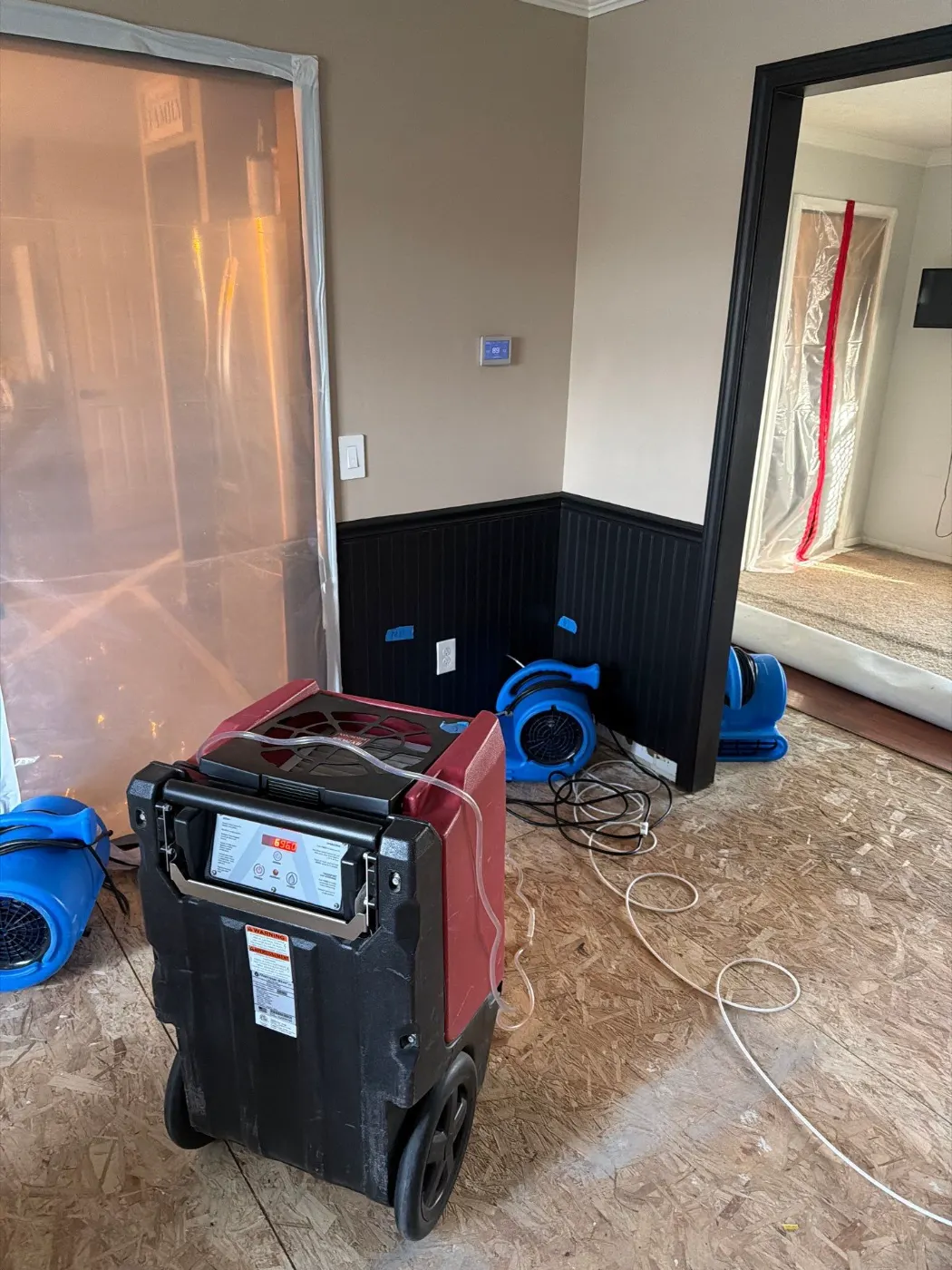
You cannot dry a subfloor through the surface. The finished floor has to come up in the affected area so the structural layer can be assessed and dried with air movers and a heat injection system. Most subfloor jobs in Meridian-Kessler run between $1,200 and $4,500 depending on square footage and what flooring needs replacement. The full process is detailed in our guide to subfloor water damage detection and repair cost. If joists below the subfloor show staining or surface rot, those are addressed before any new flooring goes back down.
Problem: A Musty Smell You Cannot Locate
If a room smells like a wet basement but looks fine, your nose is picking up microbial growth that your eyes have not found yet. Mold begins forming on damp materials within 24 to 48 hours, and the smell is one of the first detectable signs. Meridian-Kessler homeowners often notice this in finished basements, closets against exterior walls, and rooms above crawl spaces.
Solution: Treat the Smell as Evidence, Not a Nuisance
Air fresheners and dehumidifiers will mask the odor without solving the problem. The fix is finding the moisture source feeding the growth. We pull back baseboards, inspect behind furniture, and check wall cavities with a borescope when needed. Once the wet material is identified, drying equipment runs until readings hit dry standard, and any contaminated material is removed under containment. Our team follows the IICRC S520 protocol, which you can review in our breakdown of what IICRC certification actually means. When a customer calls Meridian-Kessler Water Restoration about a persistent odor, we dispatch a technician within 2 hours in most cases so the source can be pinpointed before microbial spread expands the repair scope.
Problem: Peeling Paint, Bubbling Wallpaper, or Cracking Trim
When drywall absorbs moisture, the paint or wallpaper loses adhesion and trim begins to separate. This is common around windows, exterior walls, and bathrooms. In older Meridian-Kessler homes, especially those built before modern vapor barriers, this is a frequent sign of slow intrusion through window frames or failing caulk lines.
Solution: Address Both the Intrusion Point and the Wet Cavity
Sealing the exterior is only half the fix. The wall cavity behind the damaged surface usually holds moisture for weeks after the visible problem appears. We open small inspection cuts, dry the cavity with directed airflow, treat for microbial risk, and close everything back up. Skipping the cavity work almost guarantees mold within a year. Baseboard separation, nail pops, and corner bead cracks near the floor often appear alongside the peeling, and all three point to the same trapped moisture problem.
Catch It Early, Save Thousands
Hidden water damage rewards homeowners who act on small clues and punishes those who wait for certainty. If your Meridian-Kessler home is showing any of the signs in the table above, an inspection costs you nothing and could save you tens of thousands. Meridian-Kessler Water Restoration has been serving central Indiana since 2018 with IICRC certified technicians and honest assessments. If we cannot help, we will tell you directly. Call us today for a free moisture inspection and a clear plan for your property.
Problem: You Are Not Sure What You Are Looking At
Sometimes the signs are subtle enough that homeowners second guess themselves for months before calling anyone. A faint smell, a slightly off paint texture, a floor that creaks where it used to be silent. By the time the evidence is obvious, the repair is usually three times the cost it would have been at first detection.
Solution: Schedule a Free Inspection at the First Doubt
Meridian-Kessler Water Restoration provides free moisture inspections in Meridian-Kessler with no obligation to move forward. If we find nothing, you get peace of mind. If we find something, you get a written scope and a repair estimate before any work begins. Our crews arrive within 2 hours in most cases, and early detection consistently saves homeowners thousands compared to waiting for visible failure.
Frequently Asked Questions
How much does a hidden water damage inspection cost in Meridian-Kessler?
Meridian-Kessler Water Restoration provides free inspections for Meridian-Kessler homeowners. If we find damage that requires mitigation, you receive a detailed written scope and price before any work begins. There is no charge for the assessment itself.
Can hidden water damage make my family sick?
Yes. Prolonged moisture leads to mold growth, which can trigger respiratory issues, allergies, and sinus problems. Category 2 and Category 3 water sources also carry bacteria. If anyone in your household has unexplained symptoms that improve when away from home, hidden moisture is worth investigating.
How long does it take to dry out hidden water damage?
Professional structural drying typically runs 3 to 5 days with proper equipment. Hidden damage that has been present for weeks may require demolition and full reconstruction, extending the timeline to 2 or 3 weeks depending on the affected materials and the size of the area in your Meridian-Kessler home.
Should I turn off my water if I suspect a hidden leak?
If you cannot locate the source quickly, yes, shutting off the main supply valve prevents additional damage. Then call Meridian-Kessler Water Restoration for an inspection. We can usually pinpoint the leak using thermal imaging without cutting drywall unnecessarily.
What is the difference between water damage and water mitigation?
Water damage refers to the harm caused to materials. Water mitigation is the emergency process of stopping the spread, extracting water, and drying the structure to prevent further loss. Mitigation almost always happens before restoration repairs begin.
Have a restoration question?
Our IICRC certified Meridian-Kessler crew is ready to help. Free assessments, estimate based on what we can sees, no pressure.