Water Extraction in Meridian-Kessler: Standing Water Removal Guide
It usually starts the same way. You walk downstairs in your Meridian-Kessler home, your sock hits the carpet, and suddenly you understand that something has gone very wrong. Maybe a supply line let go behind the washing machine. Maybe a sump pump quit during an overnight storm and the water table did the rest. Maybe a toilet supply line cracked while you were at work and you came home to two inches of water spreading across the first floor. Whatever the cause, the question stops being academic and becomes urgent: how do you get this water out before it eats your floors, your drywall, and your peace of mind?
That is the question Meridian-Kessler Water Restoration answers every day across central Indiana. Since 2018 we have been the company homeowners call when the shop vac is overmatched and the situation is moving faster than the towels. We are IICRC certified, BBB A+ rated, and we believe in straight talk when you are stressed. If we can help, we will tell you what it takes, what it costs, and how fast we can be at your door. If your situation does not actually need professional extraction, we will tell you that too, because wasting your money is not how we want to earn your trust in Meridian-Kessler.
How fast do I really need water extracted from my home?
Faster than you think. The IICRC S500 standard, which is the industry rulebook for water damage, treats the first 24 hours as the critical window. Clean water (Category 1) starts to degrade into Category 2 gray water around the 48 hour mark because bacteria from your floors, shoes, and walls contaminate it. Once that happens, materials that could have been dried and saved often have to be removed instead. In a typical Meridian-Kessler home, waiting six hours versus calling immediately can be the difference between a $3,500 dry out and a $15,000 rebuild. If water is still flowing, shut off the main valve first, then call us. Our average response time in the Meridian-Kessler metro is under 60 minutes for emergency calls.
What if the water came from my basement or a sewage backup?
Basement water and sewage are different problems with different protocols. Basement flooding from groundwater, sump pump failure, or foundation seepage is handled by our basement flooding crew and often involves extraction plus addressing the water source so it does not return. Sewage backups are Category 3 contaminated water and require full PPE, removal of affected porous materials, and EPA-registered disinfectants. Both are jobs we handle daily across the Meridian-Kessler area, and both demand fast response. The longer contaminated water sits, the more of your home has to be cut out and replaced.
What happens after the water is out?
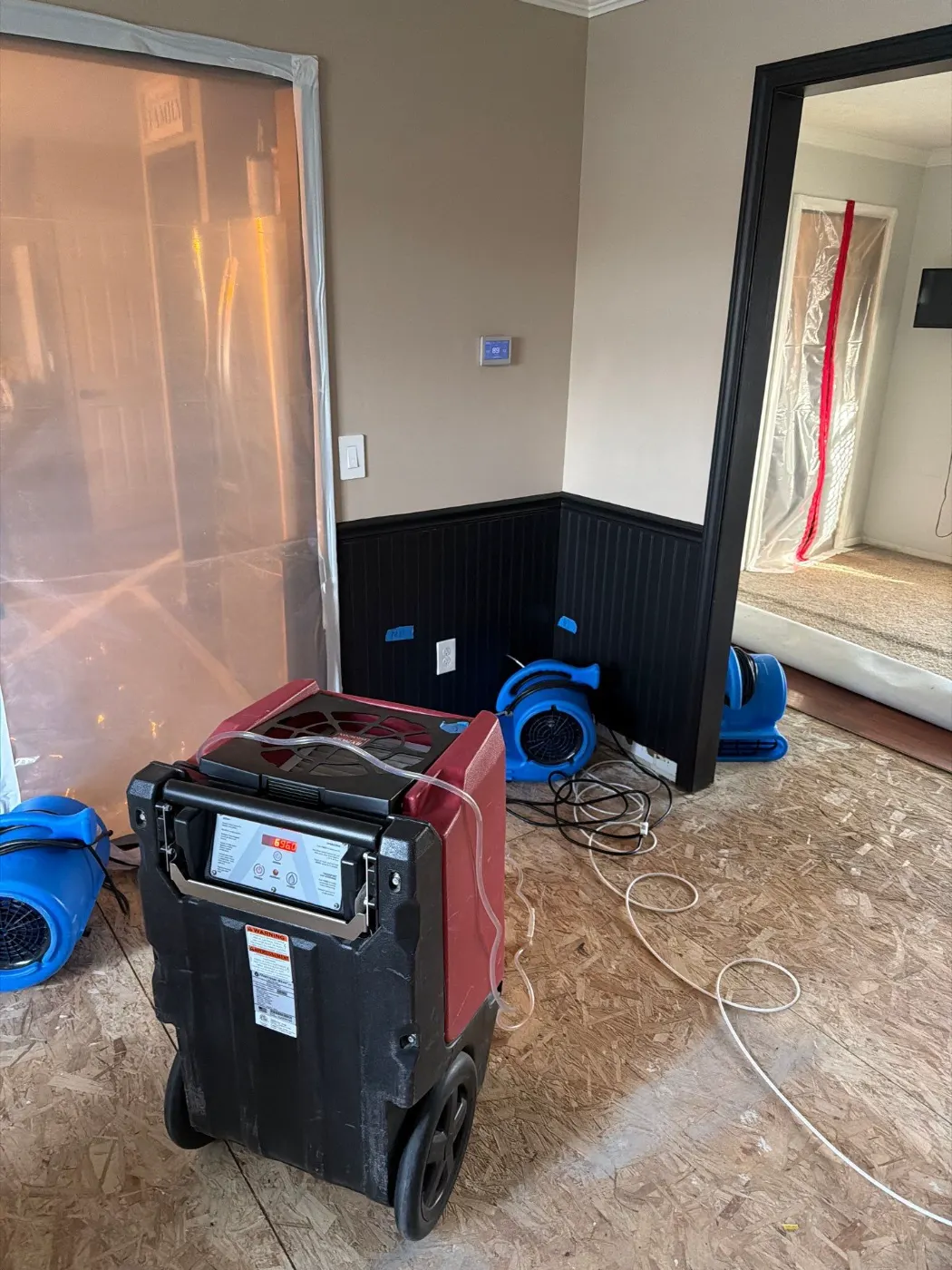
Once extraction is complete, we set air movers (roughly one per 150 square feet of wet area) and dehumidifiers sized to the cubic footage of the affected space. We check moisture levels every 24 hours and adjust equipment placement until materials hit dry standard, which is typically the moisture content of unaffected materials in the same building. Most Meridian-Kessler drying jobs run three to five days. Hardwood floors and plaster walls can take seven to ten. We do not pull equipment early to save you money on the rental, because partial drying is what feeds mold growth two weeks later. Expect the equipment to be loud and warm. A properly drying space will feel like a dry summer day, and that is by design. Turning fans off overnight to sleep, or opening windows on a humid day, can add 24 to 48 hours to the job and is one of the most common reasons drying stalls.
What should I do in the first 30 minutes while waiting for the crew?
Safety first, then documentation. If the water is anywhere near electrical outlets, the panel, or appliances, kill the breaker before stepping into the affected area. Shut off the water source if you have not already. Move anything you can lift, especially paper, electronics, and upholstered furniture, to a dry room. Pull up loose area rugs because the dyes can bleed into carpet and hardwood within hours. Take photos and short videos of every room, every wet item, and the source of the leak before you move anything else. Do not start tearing out drywall or pulling baseboards on your own. That work needs to be done in a specific sequence for insurance documentation, and Meridian-Kessler Water Restoration handles it as part of the scope.
How do I know if you are the right company to call?
Ask three questions of anyone you call: Are you IICRC certified? Do you have truck mounted extraction equipment on site, not rented? Will you provide a written scope and direct insurance billing? If the answer to any of those is no, keep dialing. We have been doing this in Central Indiana since 2018, our techs carry current IICRC credentials, and our trucks are loaded before they leave the shop. Honesty matters more to us than upsells. If your damage is minor enough to handle yourself, we will tell you and walk you through it on the phone at no cost.
What is the difference between extraction and drying?
Extraction is the physical removal of standing and absorbed water using truck mounted vacuums, portable extractors, and weighted wands that press water out of carpet pad. Drying is what happens after, using air movers and commercial dehumidifiers to pull residual moisture out of building materials over the following three to five days. Both matter, but extraction is where the biggest savings happen. Removing a gallon of water with a vacuum takes seconds. Evaporating that same gallon with a dehumidifier takes hours and costs you in equipment runtime. A proper crew extracts every drop they can reach before plugging in the first fan. You can read more about the full process on our water damage restoration page.
Can I just use a wet vac and skip the professionals?
For a small spill, sure. If a pipe under your sink dripped a few gallons onto vinyl flooring, a shop vac and some towels will handle it. The line gets crossed once water has spread to more than one room, soaked into carpet pad, gone under cabinets or baseboards, or reached drywall. A standard wet vac pulls roughly 1 to 2 gallons per minute. Our truck mounted units pull 40 to 60 gallons per minute and create the suction needed to lift water out of pad and subfloor, not just the surface. You also need moisture meters and thermal cameras to confirm hidden water is gone. Without those, the water you cannot see keeps doing damage behind the walls. We also see homeowners damage perfectly good carpet by over extracting with a small machine that crushes the pad without ever lifting the water trapped beneath it. At that point you are paying for new pad on top of the original problem.
What does standing water removal cost in Meridian-Kessler?
Most extraction only jobs in Meridian-Kessler fall between $400 and $1,500 depending on volume, access, and contamination level. Full restoration including extraction, drying, antimicrobial treatment, and reconstruction typically runs $2,500 to $7,500 for a single room and $10,000 to $25,000 for a finished basement. Category 3 water (sewage or flood water) costs more because of PPE, disposal fees, and the need to remove porous materials. We give you a written scope and price before we start, and if your loss is covered, we bill your insurance directly. For a full breakdown, see our water damage restoration cost guide.
Will my homeowners insurance cover the extraction?
Usually yes, if the source was sudden and accidental. A burst supply line, a failed water heater, an overflowing washing machine, or a storm driven roof leak are typically covered. Long term seepage, ground water without a flood policy, and neglected maintenance issues are usually not. Carriers want documentation: photos before anything is moved, moisture readings, a written scope, and daily drying logs. We handle that paperwork on every job and speak the adjuster's language. Call your carrier as soon as the property is safe, get a claim number, and let us coordinate the rest. One thing worth knowing: most policies have a mitigation clause that requires you to act quickly to limit further damage. Waiting days to call a professional because you are unsure about coverage can actually give the carrier grounds to reduce your payout, so the safer move is to start mitigation immediately and sort the paperwork in parallel.
When the Water Will Not Wait, Neither Do We
Standing water is one of those problems where the right move in the first hour shapes the next six months of your life as a homeowner. The difference between a clean extraction and a full reconstruction often comes down to who you called and how fast they showed up. Meridian-Kessler Water Restoration has built our reputation in Meridian-Kessler on being straight with people, showing up when we say we will, and telling you the truth about what your home needs, even when the truth costs us a job. If you are looking at standing water right now, pick up the phone. We will tell you what we see, what it takes, and what comes next.
Frequently Asked Questions
How fast can Meridian-Kessler Water Restoration get to my Meridian-Kessler home for water extraction?
Our standard emergency response time in the Meridian-Kessler area is under 90 minutes for most addresses, and often faster during overnight hours when traffic is light. We dispatch trucks the moment your call comes in.
Will my homeowners insurance cover standing water removal?
Most policies cover sudden and accidental water losses, including extraction labor and equipment. We document moisture readings, take photos, and provide IICRC-aligned reports that adjusters in Meridian-Kessler accept. Flood damage from outside groundwater usually requires a separate flood policy.
Can I just use a shop vac and skip professional extraction?
For a contained spill under one inch in a small area, a shop vac can work. For anything covering multiple rooms, soaking carpet pad, or reaching subflooring, a residential vacuum lacks the suction to pull bound water out. You will end up with mold in 48 to 72 hours.
What is the difference between Category 1, 2, and 3 water?
Category 1 is clean water from a supply line. Category 2 is gray water from appliances or showers with some contamination. Category 3 is black water containing sewage, storm runoff, or pathogens. Each category requires different PPE, extraction protocols, and material disposal rules under IICRC S500.
How long does the full extraction and drying process take?
Extraction itself usually takes 2 to 6 hours depending on the volume and surfaces involved. Structural drying with air movers and dehumidifiers typically runs 3 to 5 days, with moisture readings taken daily until materials reach pre-loss dry standards.
Have a restoration question?
Our IICRC certified Meridian-Kessler crew is ready to help. Free assessments, estimate based on what we can sees, no pressure.